Article
7 min read
"AI Isn’t a Silver Bullet — it’s a New Colleague" Sándor Gáspár on Integrating AI into Enterprise Operations
Artificial intelligence has entered corporate thinking with more momentum than ever. But what is it actually (not) good for? Where does the real value lie? And what makes an AI project successful from a business perspective? We discussed these questions with Sándor Gáspár, Head of the AI Competence Center at Stratis.
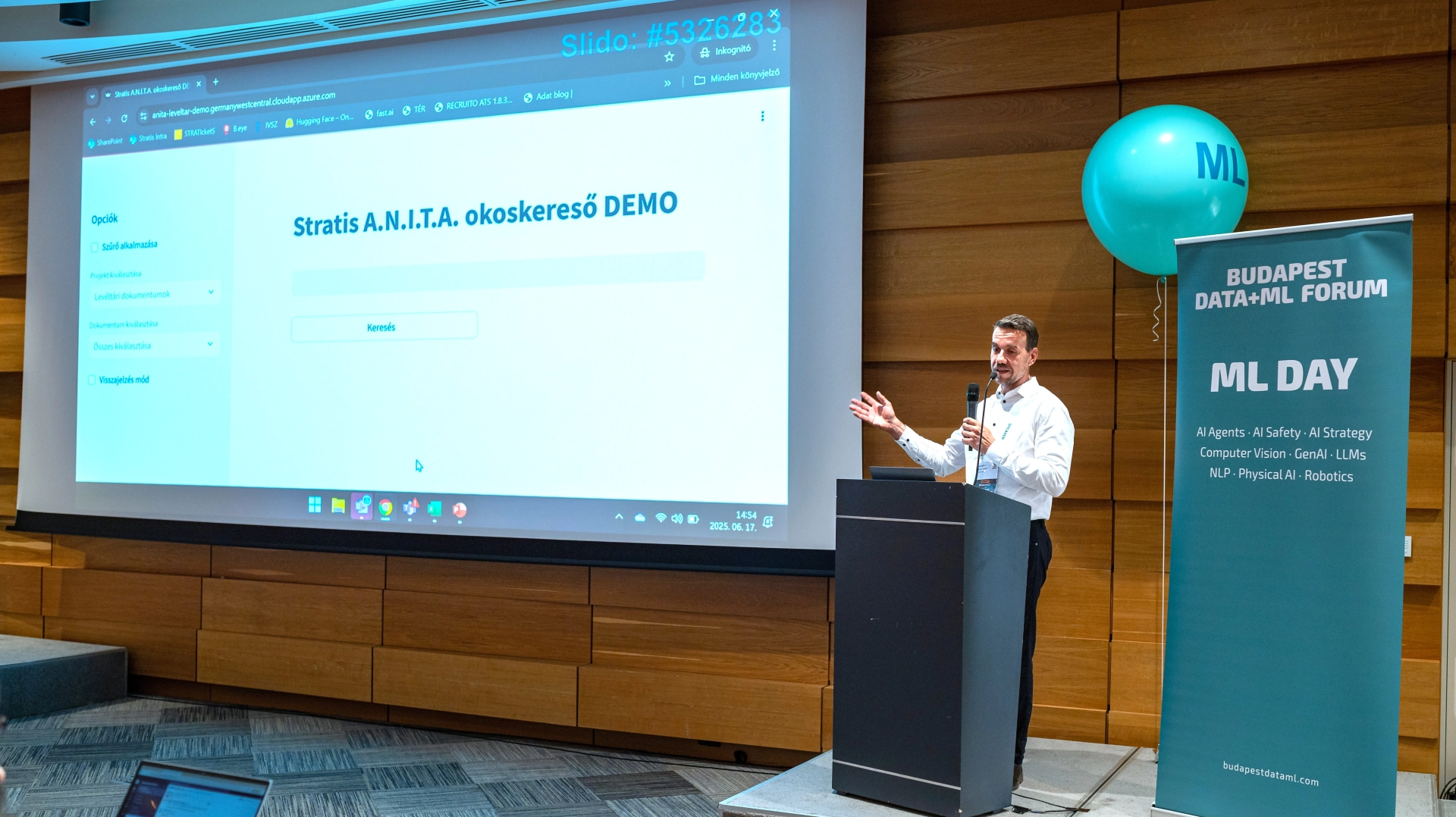
It’s no longer whether to deal with AI, but how
“When we started working on AI topics five years ago, sales were slow and we didn’t have enough projects. Today we see the market has taken off and the real question is how to implement these initiatives well,” says Sanyi, who in recent months has led several enterprise AI projects from the consulting side.
He believes many organizations now recognize that AI can’t be ignored. “There’s market pressure. Clients feel something is happening that can fundamentally reshape operations. The question is no longer whether to do something with AI, but what, how, and where to start.”
Where does it make sense to start?
“The first task is always to pinpoint the specific business problem we seek to answer with AI,” Sanyi stresses.
When you have a hammer, everything looks like a nail. A successful AI project doesn’t start from the technology, it starts from the problems to be solved and the business outcomes to achieve. Only then do you choose the right tool.
“A typical case: someone wants a chatbot because it’s trendy. But as we talk, it turns out they don’t need a chatbot at all, they need a client portal or a well-designed customer process. The goal isn’t to ‘implement AI’; it’s to find a sensible solution.”
That’s why every project begins with a thorough assessment: what data is available, what’s the real business goal, and what are the system expectations. If needed, they run a proof of concept (PoC) to test what the model can deliver on the company’s data.
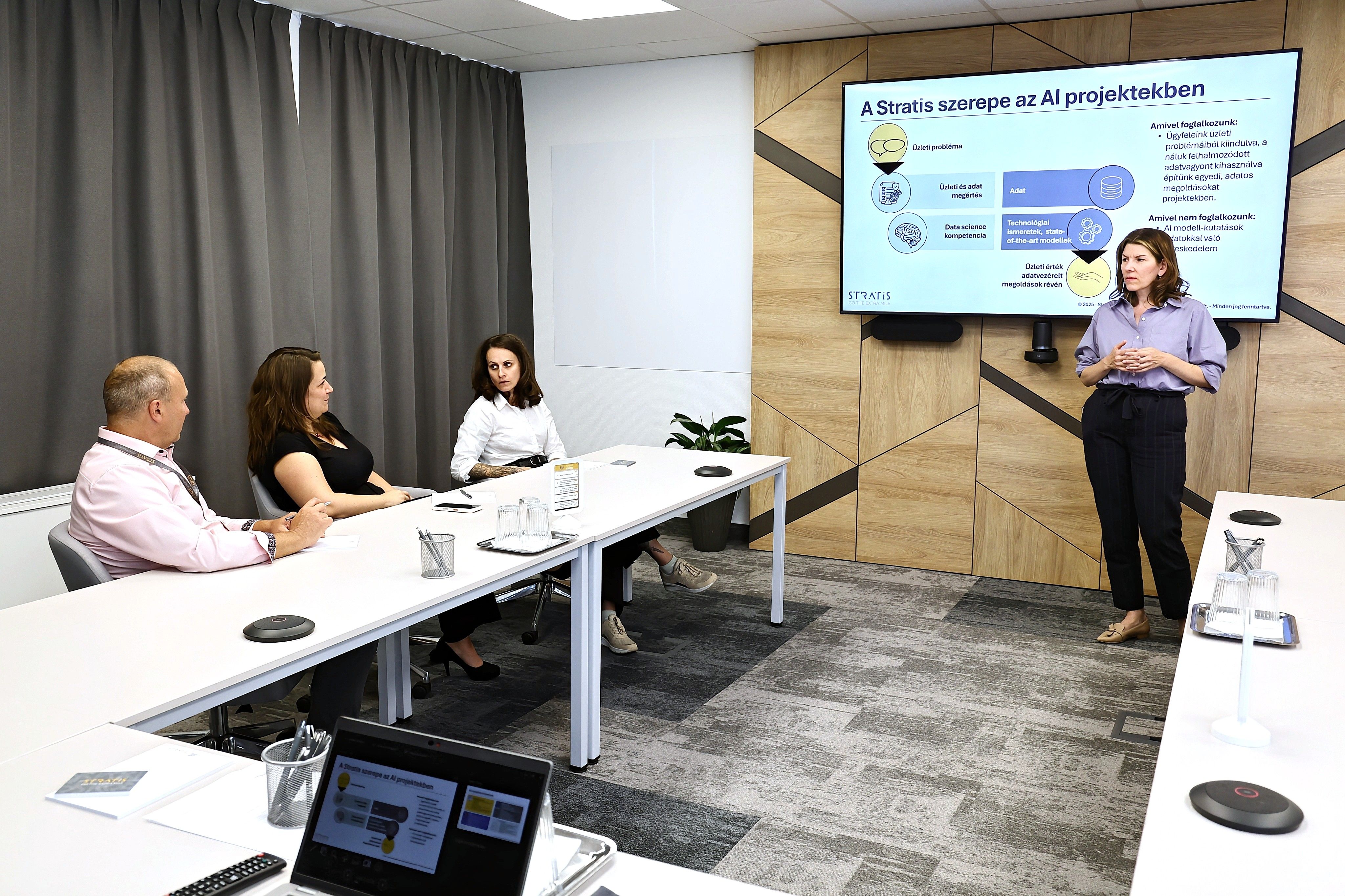
Often we’re the ones who say: let’s not do it like this
With the AI hype come unrealistic expectations, Sanyi acknowledges.
“We had a client who wanted to rebuild their entire core (primary) activity on AI. We told them: doing that now would be like building a Star Destroyer - the world’s money wouldn’t be enough. And AI might not even be what’s most needed to reach the goals, sometimes it’s a well-chosen industrial software product.”
As consultants, he says, a key responsibility is to provide guidance not only from a technology angle but from a business one, too.
“There are many AI tools, but not all work well in other than English language environments or under enterprise-grade security requirements. We’ve had to tell clients that the technology they picked simply wouldn’t meet their objectives.”
What makes an AI project succeed?
Sanyi sums up the core lessons that guide Stratis:
Don’t try to do everything at once. First, see what’s achievable with the data you have—this often becomes clear at PoC stage.
Security is critical. Especially with sensitive data, you can’t rely on open AI services. You need a closed, enterprise environment.
Define AI’s role precisely within the process. Just like a new colleague performs best with a clear job description, AI needs a well-defined place: what we expect from it, which inputs it requires, who it serves, and how it returns results.
Don’t shy away from proven technologies. “Often, 5–10-year-old, well-established solutions are far more cost-effective than the latest AI tools. If they deliver the same business outcome, you don’t need the newest thing just because of the hype.”
Part of consulting is staying current on the tech, every day
New AI developments surface almost daily; keeping pace is a real challenge for large organizations. “A few weeks ago, a fascinating article appeared: researchers hid prompt instructions in publications using white text on a white background - imperceptible to humans - to bias AI-based evaluations in a positive direction. When we discussed security with a client, they asked, ‘So what can you do about this?’ In such situations, you must respond quickly and credibly. That’s consulting: staying up to date - not only technically, but in terms of responsibility, too.”
Don’t admire AI, use it sensibly
Sanyi closes with this thought:
“The biggest challenge today is that technology advances much faster than clients can adopt it. Meanwhile, new waves of hype keep emerging, and many want to align with them reflexively, even when there’s no real business need. They’re unsure where to enter.”
“Our view: AI creates value when it’s grounded. When it’s introduced with a clear business objective, the right infrastructure, high-quality data, and measurable outcomes. That’s what we do, and that’s how we can help.”
About author

Gáspár Sándor has been leading Stratis' artificial intelligence division since 2020, bringing over 20 years of experience in data science. Together with his team, he develops machine learning-powered decision support solutions for large enterprises, leveraging our clients' existing data assets. Additionally, he assists in automating our clients' existing processes using deep neural networks-based NLP and machine vision solutions.